Editor’s note: This article was inspired by a conversation with accessibility advocate Marisa Sposaro on The Digital Access Show. Marisa shared her lived experience of using assistive technology, reminding us that “Reading is a right, not a privilege.” Her story illustrates why accessibility is about giving people choice, independence and equal access to information.
Artificial intelligence (AI) is everywhere. It can answer questions, describe photos, read documents and even help us write emails. For people with disability, AI is opening new opportunities to access information and participate more independently.
But AI isn’t replacing assistive technology. Instead, it’s becoming another valuable tool that works alongside it. The real story isn’t about what AI can do.
It’s about what people can achieve when they have the right technology, the right training and the freedom to choose what works best for them.

Marisa Sposaro, who is blind and a lifelong Braille user, often says, “Reading is a right, not a privilege.”
That simple statement captures what accessibility is really about. Everyone should have equal access to information, education and the opportunity to participate fully in everyday life.
Marisa recently shared her story on The Digital Access Show. Like many people, she embraced new technology expecting it to make life easier. Instead, she found herself exhausted.
She relied on a screen reader using synthetic speech for a period of time. Every email, every website and every document became a continuous stream of audio. Listening all day was mentally draining.
She began to wonder if the problem was her. It wasn’t.
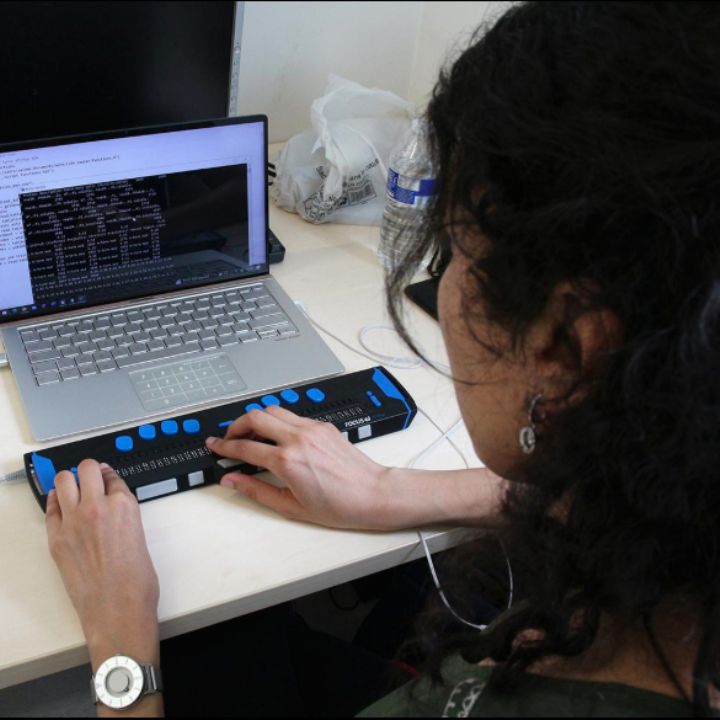
An experienced DASAT trainer recognised that Marisa learned differently. By introducing a Braille display alongside her screen reader, everything changed.
Instead of only listening, she could also read with her fingertips. Her confidence grew. Her productivity improved. Most importantly, she found a way of working that suited her.
The technology hadn’t changed. The way it was used had.
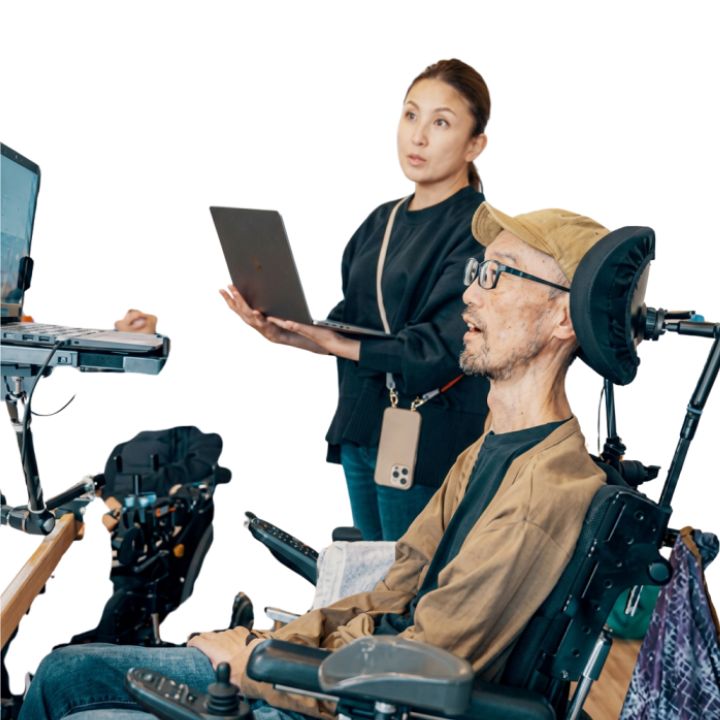
Marisa’s experience highlights an important lesson. There is no single assistive technology that works for everyone. Some people prefer speech. Others rely on Braille. Many use a combination of tools depending on the task.
The goal isn’t to find one perfect solution. It’s to give people choices so they can decide what works best for them. That choice is what creates independence.

AI is adding another layer to assistive technology. Today, people who are blind or have low vision can use AI to describe photographs, identify everyday objects, summarise lengthy documents and answer questions about images or charts.
These tools can reduce barriers and help people complete everyday tasks with greater confidence and independence.
AI-powered optical character recognition (OCR) is also making printed information more accessible. However, it’s important to understand its limitations. OCR continues to improve, but it can still confuse similar-looking letters and numbers, such as 5 and S, or 0 and O. For important legal, financial or medical documents, the results should always be checked carefully rather than relied on without question. Like every assistive technology, AI works best when people understand both its strengths and its limitations.
One of the most powerful parts of Marisa’s story isn’t about AI or Braille. It’s about training. She believed she simply wasn’t good at using technology.
In reality, nobody had shown her a method that matched the way she learned. Once that happened, technology that once felt overwhelming became empowering.
This is an important reminder for organisations, educators and employers. Buying new technology is only the beginning. People also need training, support and time to build confidence. That’s what turns useful tools into life-changing opportunities.

AI can remove many barriers, but it shouldn’t be expected to fix barriers that never should have existed. When information is created accessibly from the beginning, assistive technologies, including AI, can work far more effectively.
Accessibility and AI aren’t competing ideas. They complement each other. Accessible design provides the foundation, while AI helps people interact with information in new and exciting ways.
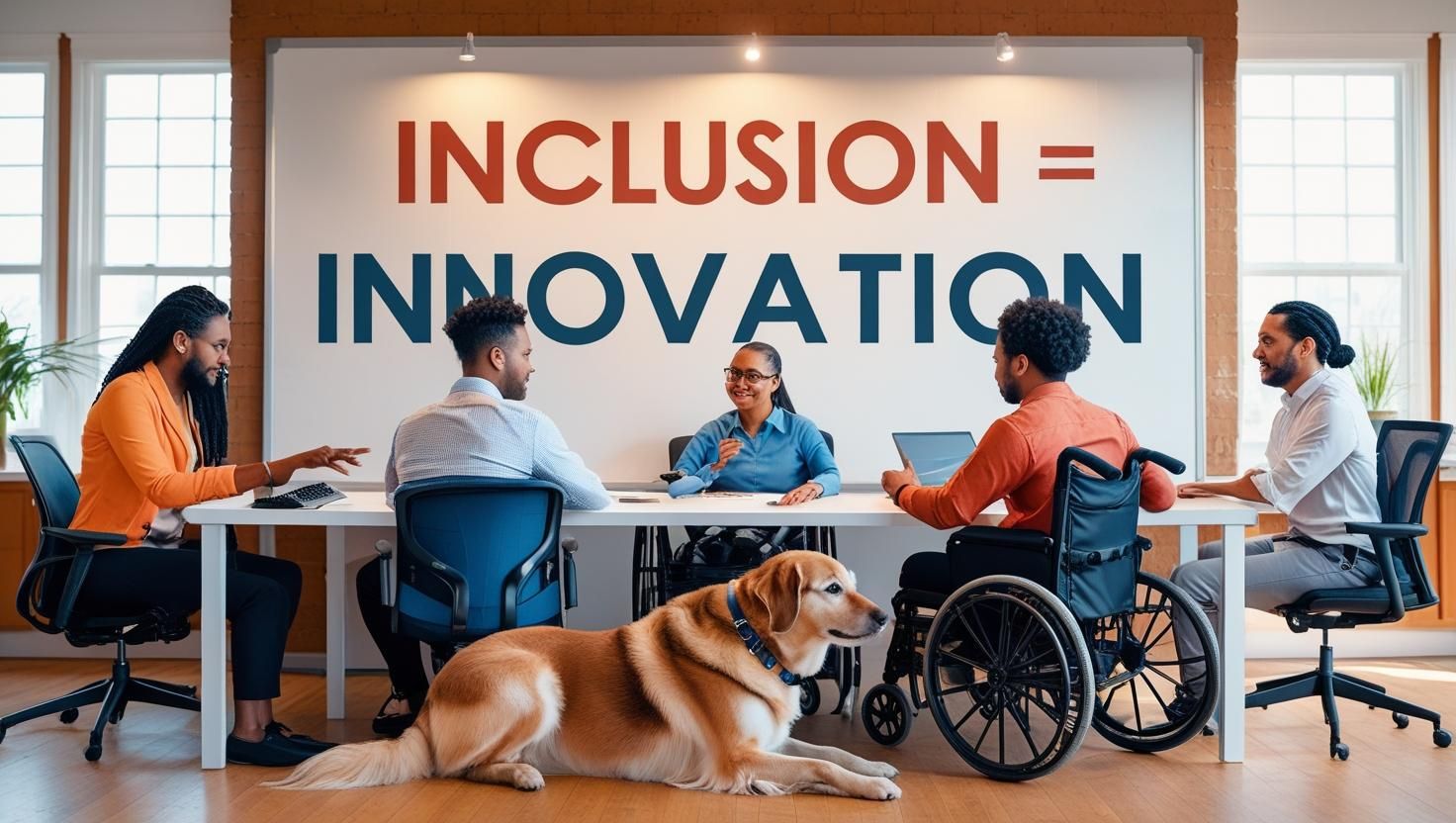
Some of the technologies we use every day have their roots in accessibility.
Closed captions (National Institute of Standards and Technology) were developed so people who are deaf or hard of hearing could enjoy television and access information. Today, millions of people use captions when watching videos in busy environments, learning a new language or simply keeping the volume down.
Speech recognition (Voice Recognition – W3C Accessibility Perspectives) was refined to help people who couldn’t easily use a keyboard because of physical disability. Today, we use it to dictate messages, search the internet and control our phones with our voice.
Optical character recognition (OCR) has many uses today, but one of its earliest breakthroughs (Ray Kurzweil – Reading Machine) came from efforts to help people who are blind read printed text using a computer. That same technology now powers document scanning, translation apps and many AI-powered accessibility tools.
These innovations remind us that designing for accessibility often leads to solutions that benefit everyone.
As AI continues to evolve, we have another opportunity to create technology that is inclusive from the beginning. When accessibility is part of the design process, innovation doesn’t just remove barriers for people with disability—it creates better experiences for all of us.
The future of assistive technology is exciting. AI assistants are becoming more capable. Smart glasses can recognise objects and read signs aloud. Braille technology continues to evolve alongside mainstream devices.
Yet the most important lesson hasn’t changed. Technology should adapt to people.
People should never be expected to adapt to technology. Marisa’s story reminds us that independence doesn’t come from one breakthrough device or one clever AI tool.
It comes from having choices. It comes from learning new skills. It comes from finding the tools that work for you. As AI continues to evolve, it has enormous potential to help people read, communicate, work and participate more independently.
But its greatest strength isn’t replacing people. It’s helping people do more for themselves. Because reading is a right, not a privilege. And that’s what digital accessibility has always been about.
For further listening:
Marisa Sposaro discusses Braille, assistive technology and why “Reading is a right, not a privilege” on The Digital Access Show.