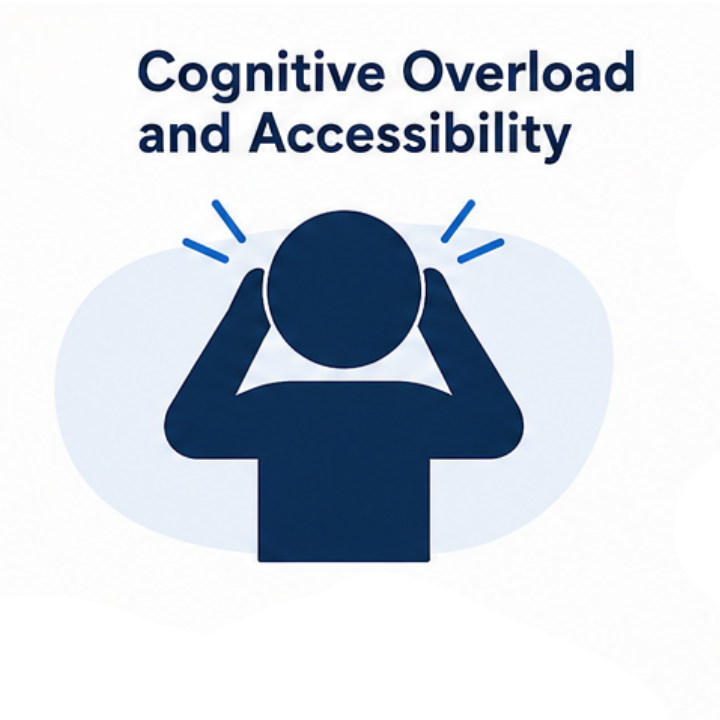
The digital world that we live in means that people are expected to read, process, remember, and respond to huge amounts of information. Emails, websites, forms, reports, policies, training materials, schoolwork, and online systems all compete for our attention.
When information is clear and well organised, most people can understand and use it without much effort. However, when information is confusing, cluttered, poorly structured, or presented too quickly, it can create cognitive overload.
Cognitive overload happens when the brain is asked to process more information than it can comfortably handle at one time. When this occurs, people may feel overwhelmed, frustrated, mentally exhausted, or unable to make sense of what they are reading.
This is not simply an inconvenience. Cognitive overload can become a significant accessibility barrier.
While anyone can experience cognitive overload, some people are affected more often or more intensely than others. This includes autistic people, people with ADHD, people with learning disabilities, older adults, people experiencing stress or fatigue, and individuals accessing information in a second language.
Good accessibility is not just about screen readers, captions, or physical access. It is also about ensuring information is easy to understand, navigate, and process.
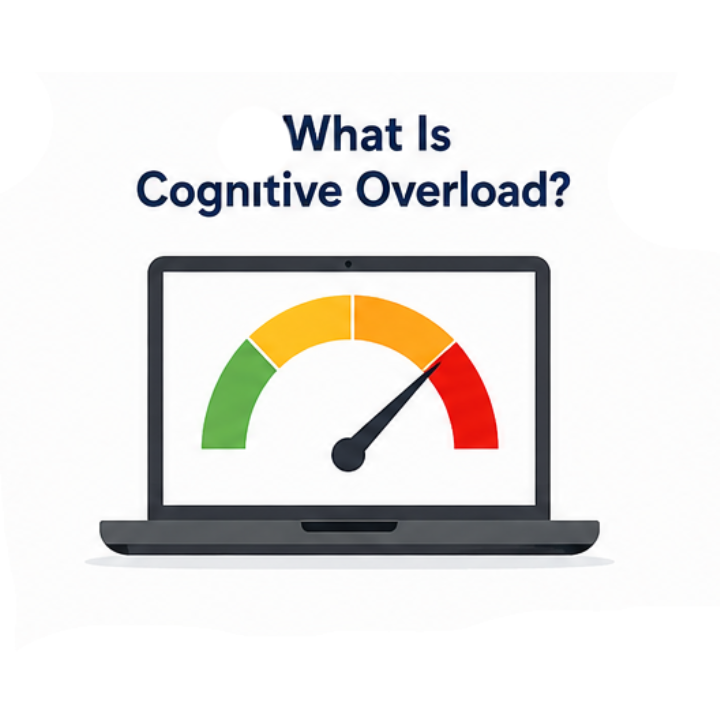
A good way to understand cognitive overload is to think about a computer.
When a computer has plenty of available memory, it runs smoothly. Programs open quickly, files load without delay, and tasks are completed efficiently. However, when too many applications, browser tabs, downloads, and background processes are running at the same time, the computer starts to slow down. It may freeze, become unresponsive, or struggle to complete even simple tasks.
The human brain works in a similar way.
Our brains can process a lot of information, but they have limits. When information is clear and organised, we can learn, understand, and make decisions effectively. When information becomes cluttered, confusing, or overwhelming, our mental processing capacity can become overloaded.
Think about opening a document or online lesson filled with:
- Long paragraphs
- Small text
- Bright colours
- Complex instructions
- Loud videos
- Multiple pop-ups
- No headings
- Technical language
- Too many choices
Each of these elements acts like another program running on a computer. Individually they may not cause problems. Together, they can overwhelm the brain’s ability to process information efficiently.
Instead of helping people understand information, the content creates confusion, frustration, and mental fatigue.
Cognitive overload is not about intelligence. Just as a powerful computer can slow down when it is trying to do too many things at once, intelligent and capable people can struggle when information exceeds their processing capacity.
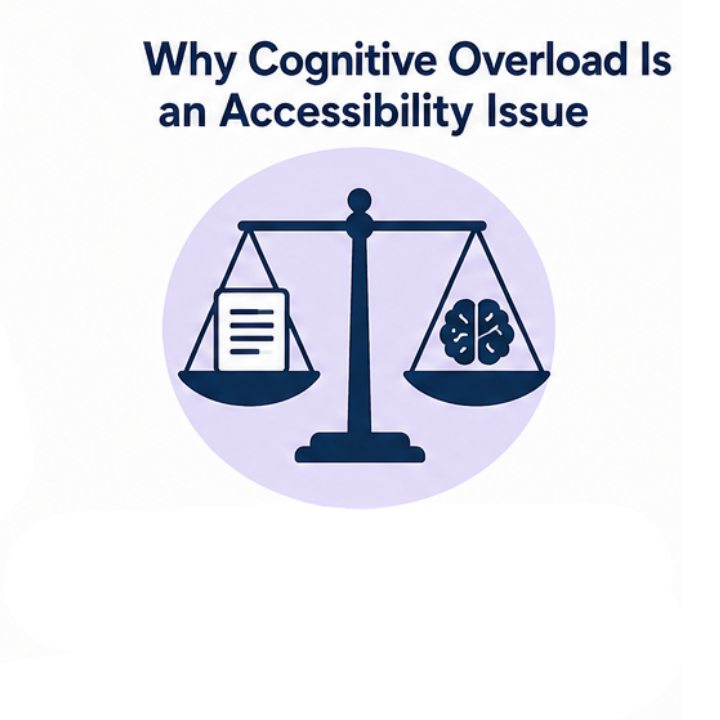
Accessibility is often associated with physical access, screen readers, or alternative formats. While these are important, accessibility also includes making information easy to understand and use. They also help reduce cognitive load by making information easier to understand, navigate, and process.
As discussed in What is Digital Accessibility?, accessibility is about removing barriers so people can access and understand information independently. When information is poorly designed or difficult to process, those barriers can quickly reappear.
A document can be technically accessible and still be difficult to process. Organisations such as Meet Aandi highlight the importance of creating documents that work for people with different learning styles, abilities, and communication needs.
For example, a PDF may work perfectly with a screen reader but still contain dense paragraphs, complex language, unclear instructions, and poor organisation. In this case, the information is available, but it may not be accessible.
This is where cognitive accessibility becomes important.
Cognitive accessibility focuses on reducing unnecessary mental effort so people can concentrate on understanding information rather than trying to work out how to access it.
Education environments often place significant demands on a student’s attention and memory. Students are expected to absorb information, follow instructions, complete assessments, manage deadlines, and participate in classroom activities.
A student may begin the day by checking announcements, downloading resources, reading lesson notes, watching videos, completing quizzes, and responding to discussion posts. Before learning even begins, they may already be managing multiple streams of information.
For many students, this is manageable. For others, it can become overwhelming.
When learning materials are poorly designed, cognitive overload increases. Students may struggle to focus, follow instructions, retain information, or complete tasks independently.
This can affect students of all abilities but may have a greater impact on neurodivergent students, including autistic students, students with ADHD, and students with learning disabilities.
Neurodivergent people often process information differently from neurotypical people. These differences are not deficits; they simply reflect different ways of thinking, learning, and interacting with the world.
However, many neurodivergent people experience cognitive overload more frequently because additional mental effort may be required to process information, manage distractions, navigate sensory environments, or interpret communication.
For autistic people, sensory information, social communication, and unexpected changes may contribute to overload.
For people with ADHD, competing thoughts, distractions, and task switching may increase cognitive demands.
For people with dyslexia and other learning disabilities, large amounts of text or complex written instructions may require additional effort to process.
Although the reasons may differ, the outcome is often similar: information becomes harder to understand, use, and remember.
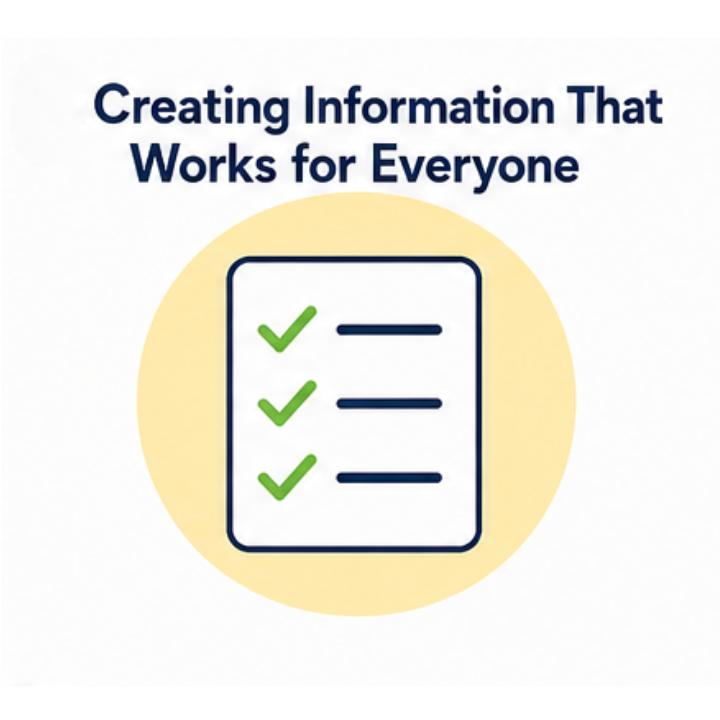
Reducing cognitive overload benefits everyone, not just people with disabilities.
Simple improvements can make a significant difference:
- Use clear headings and structure
- Write in plain language
- Break information into smaller sections
- Reduce visual clutter
- Use consistent layouts
- Avoid unnecessary jargon
- Provide accessible documents
- Give people time to process information
These changes improve understanding, reduce frustration, and help people engage with information more effectively.
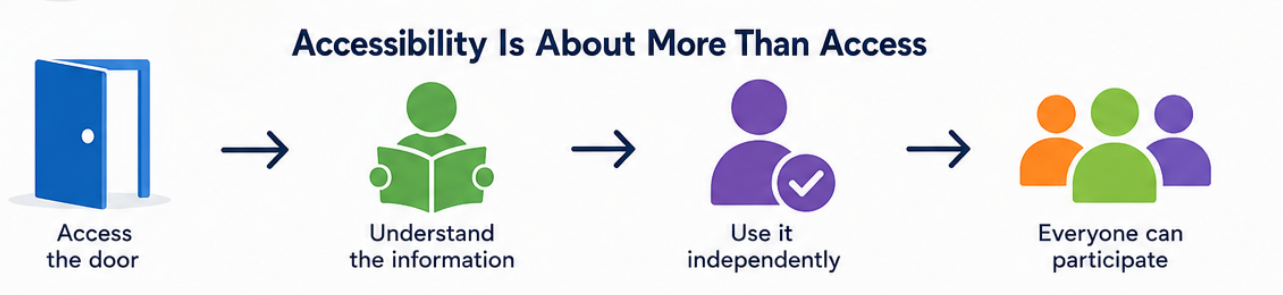
Providing access to information is only the first step. True accessibility means ensuring people can understand, process, and use that information independently.
When organisations reduce cognitive overload, they create environments where more people can participate, learn, work, and make informed decisions.
Good accessibility is not about making information simpler. It is about making information clearer.
When information is designed with cognitive accessibility in mind, everyone benefits.