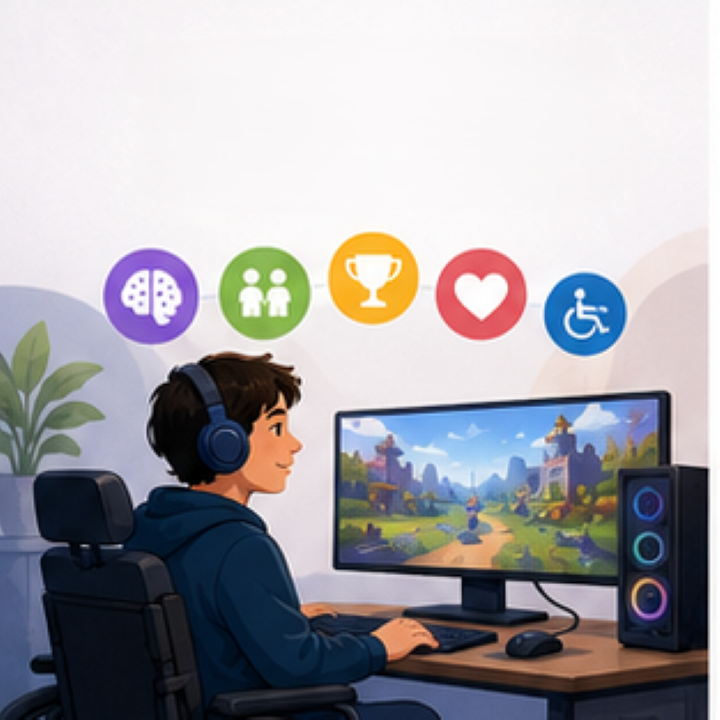
When my kids were younger, they played computer games. We were the ones who bought the computers for school. However, they also came with computer games. I saw it as little more than a distraction. After they grew up and left home, I noticed that gaming gave them more than entertainment. They gained knowledge of history and were able to apply that to current events. It helped with concentration, persistence, and confidence. That shift in perspective led me to think more broadly about what gaming can offer people with disability. In the right setting, it can support learning, connection, emotional wellbeing, and personal growth.
For many autistic people, games can be especially appealing because they are structured, predictable, and clear about what comes next.
Many games have clear rules, immediate feedback, and plenty of chances to practise through repetition, which can make them both engaging and accessible.
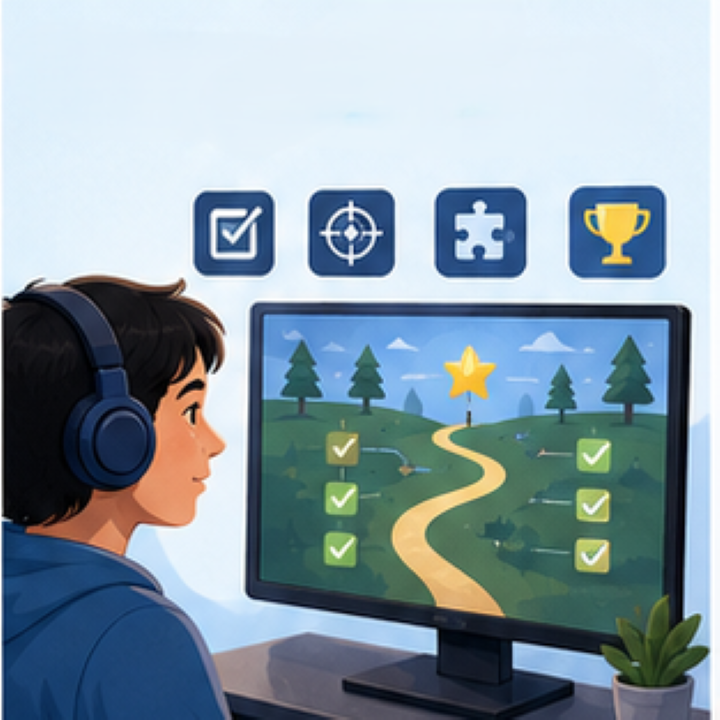
Many autistic people prefer environments that feel predictable and manageable. Computer games often provide exactly that. The goals are usually clear, the rules stay consistent, and players get immediate feedback about what is working and what is not.
Gaming can also open up different ways to interact. Depending on the game, people might communicate through text, voice chat, or simply by working together toward a shared goal. For some players, that can feel easier and less pressured than face-to-face conversation.
There is research pointing in this direction as well. A study published by the National Library of Medicine examining digital game interventions for autistic individuals found that gaming can create useful opportunities for social interaction, communication, and skill development.
Improved Coordination
and Motor Skills

Tim Durrant from Lightmare Studios discusses the facts that games do provide physical benefits in the latest episode of The Digital Access Show. A lot of games ask players to make precise movements and respond quickly. Over time, that can help build skills such as:
- Hand-eye coordination
- Fine motor skills
- Reaction times
- Visual tracking abilities
There is evidence from Science Daily certain types of games can improve dexterity and coordination, and those improvements may carry over into everyday tasks.
This matters because hand-eye coordination and fine motor control are involved in many day-to-day activities, from using tools and devices to managing routine physical tasks.
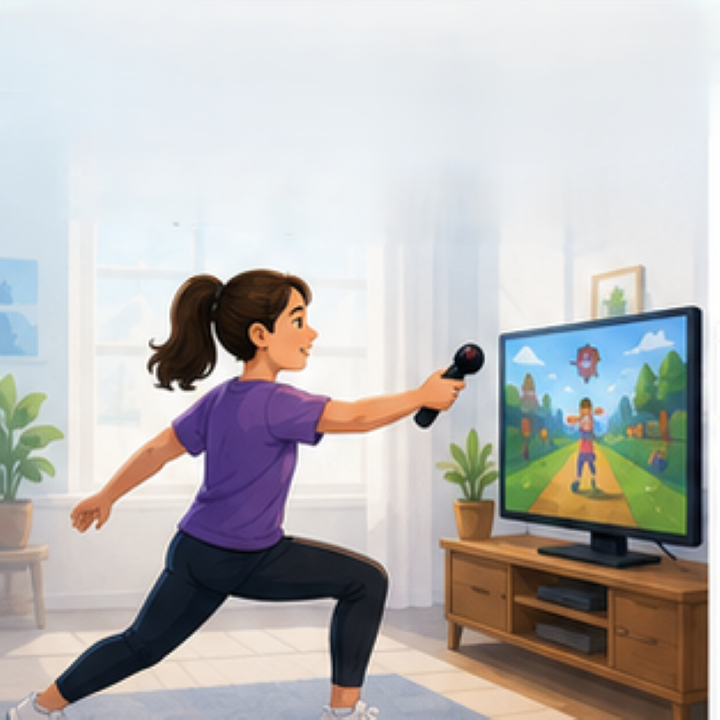
Not every game involves sitting still. Active games, often called exergames, combine movement with play. Early research with autistic children suggests these games can help with motor skills, make exercise more enjoyable, and may also have benefits for attention and some repetitive behaviours.
This possibility is discussed in research published in Entertainment Computing examining exergaming and autism, as well as findings from the National Library of Medicine on active video games and physical activity.
Problem-Solving and Critical Thinking

Many games ask players to think ahead, solve problems, manage resources, and adapt when things change. In doing so, they can strengthen:
- Critical thinking
- Planning skills
- Memory
- Decision-making
- Attention to detail
One widely discussed example comes from the National Institutes of Health. In the National Institutes of Health study on video gaming and cognitive performance, children who regularly played video games performed better on tasks involving working memory and impulse control than children who did not play. The findings should be read carefully, but they do suggest that gaming can engage important cognitive skills.
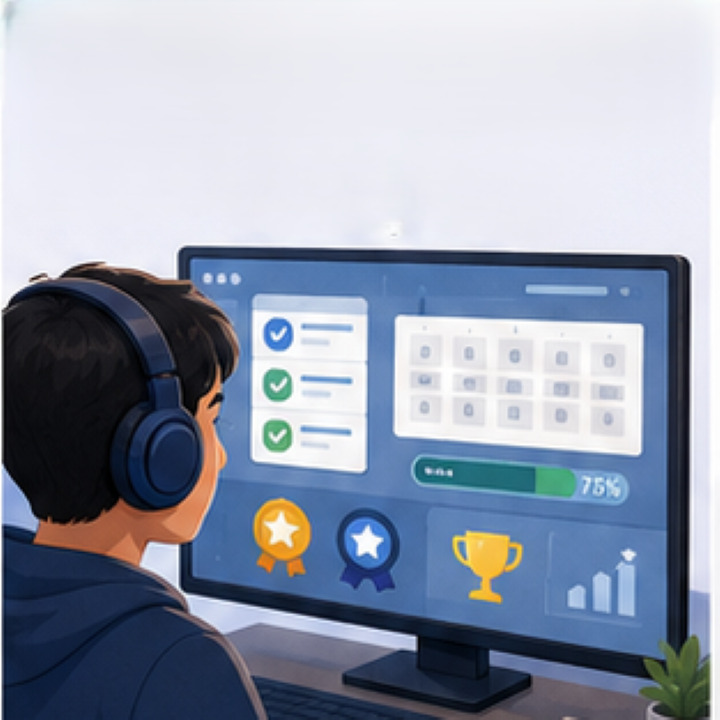
Executive functioning includes planning, organising, managing time, and working toward goals. Many games give players a practical way to use those skills without it feeling like formal training.
Players often need to keep track of several tasks at once, follow objectives, monitor progress, and change strategy when something is not working.
For autistic players, that can be a motivating way to practise skills that also matter outside the game.

Gaming also teaches a surprising amount of digital know-how. Players may need to navigate online systems, use settings menus, manage accounts, communicate with others, and troubleshoot problems as they go. Those are useful skills for school, work, and everyday life.
Building Confidence and Self-Esteem
Games tend to make progress visible. Players can see themselves improving, meeting goals, and overcoming challenges that once felt difficult.
For someone who regularly faces barriers in other parts of life, that sense of progress can be powerful. Success in a game can build confidence because the achievement is immediate and easy to recognise.
Many autistic people report using gaming as a way to relax after demanding social, sensory, or educational experiences. Familiar games can provide:
- Predictability
- Routine
- A sense of control
- Focused engagement
- Temporary relief from stress
For some people, gaming is also a way to decompress. When it is part of a balanced routine, it can offer a sense of focus, familiarity, and relief from stress. An overview of these ideas is discussed in this review of the social and emotional benefits of online gaming.
Creating Social Connections

Gaming is often dismissed as a solitary activity, but that is only part of the picture. Many games are deeply social. Players work in teams, solve problems together, chat while they play, and build relationships over time.
That social side can matter a great deal. Research involving autistic adolescents found that online gaming can support friendship, reduce loneliness, and create a sense of connection. These findings were reported in a peer-reviewed study on online gaming and social connection among autistic adolescents.

Shared interests often help friendships get started, and gaming can provide exactly that. It gives people something to talk about, something to do together, and often a more comfortable way to spend time with others.
For many autistic people, connecting around a shared interest can feel easier than stepping into an unstructured social situation.
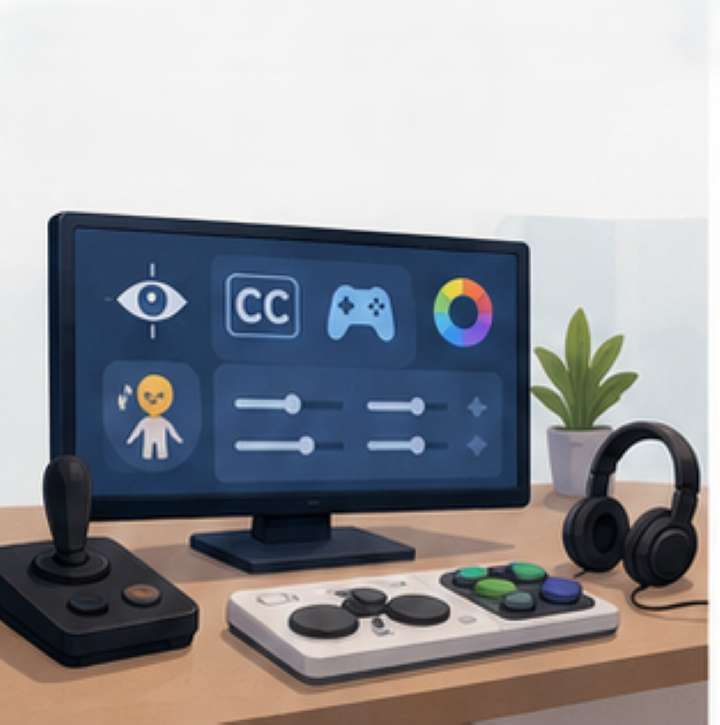
The gaming industry has made significant progress in accessibility. Many modern games now include:
- Customisable controls
- Closed captions
- Adjustable text sizes
- Colour contrast options
- Alternative input methods
- Difficulty settings
These features make a real difference. They allow more people to play in ways that suit their needs, preferences, and abilities.

None of this means gaming is useful in every situation or in unlimited amounts. Like anything else, it works best as part of a balanced lifestyle that includes movement, sleep, offline interests, and social connection.
The benefits are most likely to emerge when gaming is used thoughtfully, in moderation, and in ways that fit the person’s needs and daily life.
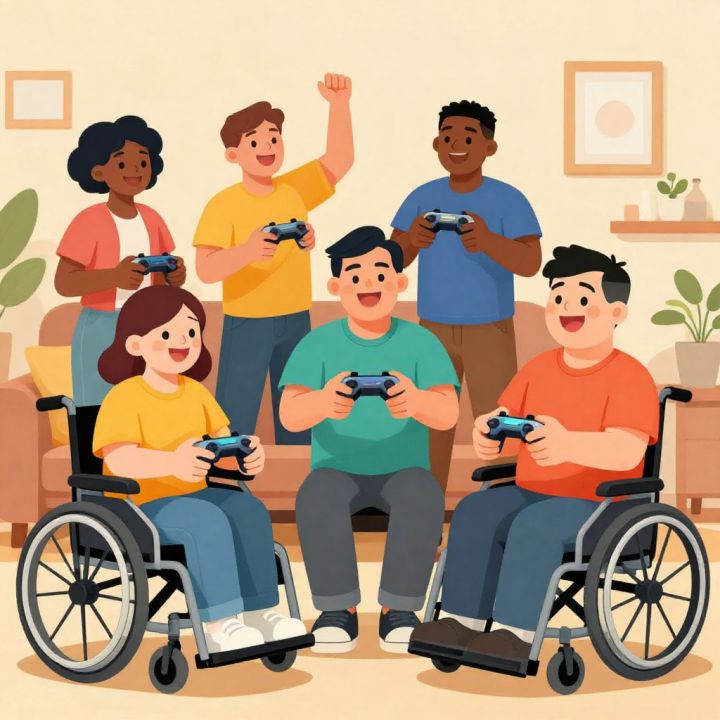
Computer gaming can be much more than entertainment for people with disability. For autistic individuals in particular, it can offer a space to build physical skills, strengthen thinking and planning, gain confidence, manage stress, and connect with others.
As accessibility improves, more people are able to take part in gaming in ways that work for them. Used well, gaming can be a meaningful and practical part of a good life, not just a way to pass the time.
While I recognise the benefits, I still do not like computer games. 😊