
Accessible communication increases growth. However, growth is not always about doing more. Sometimes, it is about doing things differently.
When we talk about expanding a business, we often think about more customers, new services, bigger markets and more opportunities. But expansion can start somewhere much simpler. It can start with changing the way we think about the people we are trying to reach and how accessible communication can help us provide better services.
What happens when we stop asking people to fit into the way we deliver our services and start looking at what we can change to make the service work better for them? This is something that really stood out to me when talking with Hanah from Care Done Differently on the Digital Access Show. Hanah has chosen to do things her way, with an open mind and a real willingness to learn.

Hanah founded Care Done Differently because she saw areas where people were not always getting the support they needed. Instead of simply accepting that this was how things were done, she looked at what could be different. Care Done Differently focuses on personalised support, building relationships and helping people have more choice and independence in their lives.
But it does not stop there. Hanah is continuing to learn and look at how her business works, including the way she communicates with the people she supports. That might sound simple, but communication is a big part of providing good support.
If the person receiving support cannot understand what is being said, or cannot communicate what they want, then something needs to change. It is not enough for the support worker to have the right information or know what needs to be done. The communication process needs to work for the person receiving the support.

A support plan can tell a worker what to do, but it cannot guarantee that communication will work. Effective support also depends on whether the person can understand the worker, express what they want and make their own choices.
These questions matter. Hanah has recognised this and has made communication part of the way her team works, with support staff learning the basics of Auslan and working on understandability and accessibility. This is an important part of the story because the person receiving support should not have to do all the work to overcome an information access barrier.
The support worker also needs to think about how they communicate. That could mean learning some Auslan, using plain English, changing the way information is presented or giving someone more time to understand what is being said. The point is to look at the whole process and work out what needs to change so the person can participate.
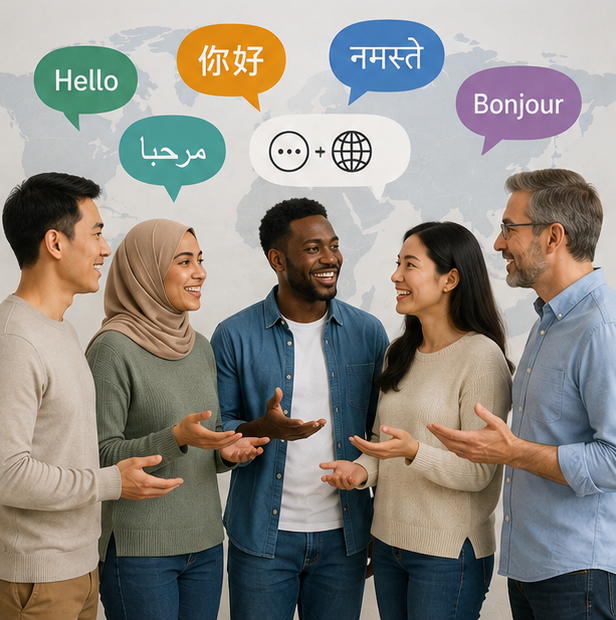
There is another part of Hanah’s communication style that stands out to me. She uses plain language, keeps her message consistent and focuses on making information easy to understand without losing respect for the person she is working with.
That balance is important. Good accessible communication is not about simplifying people. It is about simplifying information so people can understand it, make decisions and participate fully.
Hanah is also naturally fun and engaging. That makes a difference because communication is not just about getting the words right, it is also about how we connect with people. When someone is approachable, genuine and interested in the person they are talking to, it can make communication much easier.
This is where I see a strong connection with digital accessibility.
This is where accessibility becomes much bigger than technology. At its core, accessibility is about removing barriers that prevent people from participating, understanding information or achieving their goals.
Whether we are talking about disability support, customer service or digital experiences, the principle is the same: communication should work for the people we are trying to reach.
When Hanah looks at communication and asks how she can improve it, she is doing more than solving individual challenges. She is making her service available to more people.
If support staff understand that people communicate in different ways and have the skills to adapt their approach, accessible communication becomes part of every day life. More people can participate, make choices and engage with the support they receive. That improves outcomes for clients while also strengthening the service itself.
This is what expansion can look like. It is not always about adding new services or entering new markets. Sometimes it is about removing barriers so more people can benefit from what you already offer.

Let’s bring this back to websites and digital services. A business might look at browser features such as read aloud, zoom, translation and keyboard access, along with accessibility features built into devices.
These features help, but they cannot overcome poor design. If a website has confusing links, inaccessible forms or information that is difficult to understand, people may still be unable to complete the task they came to do.
Accessibility features work best when content is clear, accessible and well structured.
A change in mindset can open new opportunities. Instead of only asking, “How do we make our service accessible?”, we can ask, “Who could we reach if we removed the barriers?” That shifts the focus from compliance to opportunity.
Those people might include people with disability, users of assistive technology, people who speak English as a second language, or anyone who finds information difficult to access or understand.
When we see these groups as potential customers, clients or community members, accessibility becomes more than a problem to solve. It becomes a way to reach more people and deliver greater value.
Hanah is doing this through Care Done Differently.
By learning new skills and understanding the needs of her clients, she is creating a service that works for more people.
That is a lesson for every business. Sometimes the next opportunity is not a new product or market. Sometimes it is removing the barriers that stop people from engaging with the services you already provide.
Want to hear more from Hanah at Care Done Differently? Listen to the full episode of The Digital Access Show to hear her talk about communication, accessibility and making information easier for people to understand.
Want to hear more from Hanah at Care Done Differently? Listen to the full episode of The Digital Access Show to hear her talk about communication, accessibility and making information easier for people to understand.