
Why I Want Meta Ray-Ban Glasses for Independence

Narelle is earing Meta Ray-Ban glasses.

Meta Ray-Ban Glasses are they work it?

When people hear about the Meta Ray-Ban glasses, they often focus on the technology. The artificial intelligence, camera and ability to ask questions about the world around you are certainly impressive. While those things interest me, they are not the reason I want them.

For me, this is a story about access to information, independence and participation.

As someone with vision impairment, the challenge is often not completing a task, but accessing the information needed to do it independently. Most people read signs, scan shelves and glance at menus without a second thought. When that information is not accessible, simple activities can become frustrating and time-consuming.

That is why I am interested in the glasses. Not as the latest gadget, but as a way to make more of my own decisions.

A Trip to IGA

A recent shopping trip to IGA reminded me how much everyday life depends on information.

I knew what I wanted and expected to be in and out quickly. Instead, I spent much of my time finding products, checking aisles and working out whether the item in front of me was the right one.

By the end, I was tired from solving information problems, not walking around the store. Small barriers had turned a simple trip into something unnecessarily complicated.

The glasses may help me identify products, read labels and understand my surroundings without relying on assistance for every question.

The task remains the same. The effort required to complete it changes.

Why Hands-Free Matters

A person is using an iPhone. What digital accessibility means to me is independence.

One benefit that excites me is that the glasses are hands-free.

Services such as Be My Eyes and Aira provide valuable access to visual information through a smartphone. Be My Eyes connects users with volunteers through live video, while Aira provides trained agents who can describe surroundings and answer questions.

The challenge is managing a phone while carrying bags, picking up products or pushing a trolley. It can be awkward, particularly in a busy store.

With a camera built into the glasses and connected to the phone, I could potentially access information while keeping both hands free and continuing to shop naturally.

It sounds like a small thing, but it could make a significant difference.
Christmas Shopping

Christmas shopping is another situation I often think about.

Last year I wanted to buy a dress for a young family member. Knowing what I wanted to buy was easy. Choosing it was harder.

I needed information about colour, style, pattern and appearance. These are details many people assess instantly, but for me they often require assistance.

There is nothing wrong with asking for help. There is also satisfaction in making decisions yourself.

The glasses will not choose the dress or know the recipient’s preferences. They may give me the information to choose independently.

It is not about the dress. It is about the same opportunity to participate.

Accessing Everyday Information

Reading menus in restaurants and cafés is another area where the glasses could help.

Digital menus are not always available. I have often needed someone to read the options before I could decide what to order.

Again, the issue is not whether help is available. It is whether information is accessible.

Being able to ask questions about a menu could let me explore options, compare meals and make my own decisions.

Travelling with Confidence

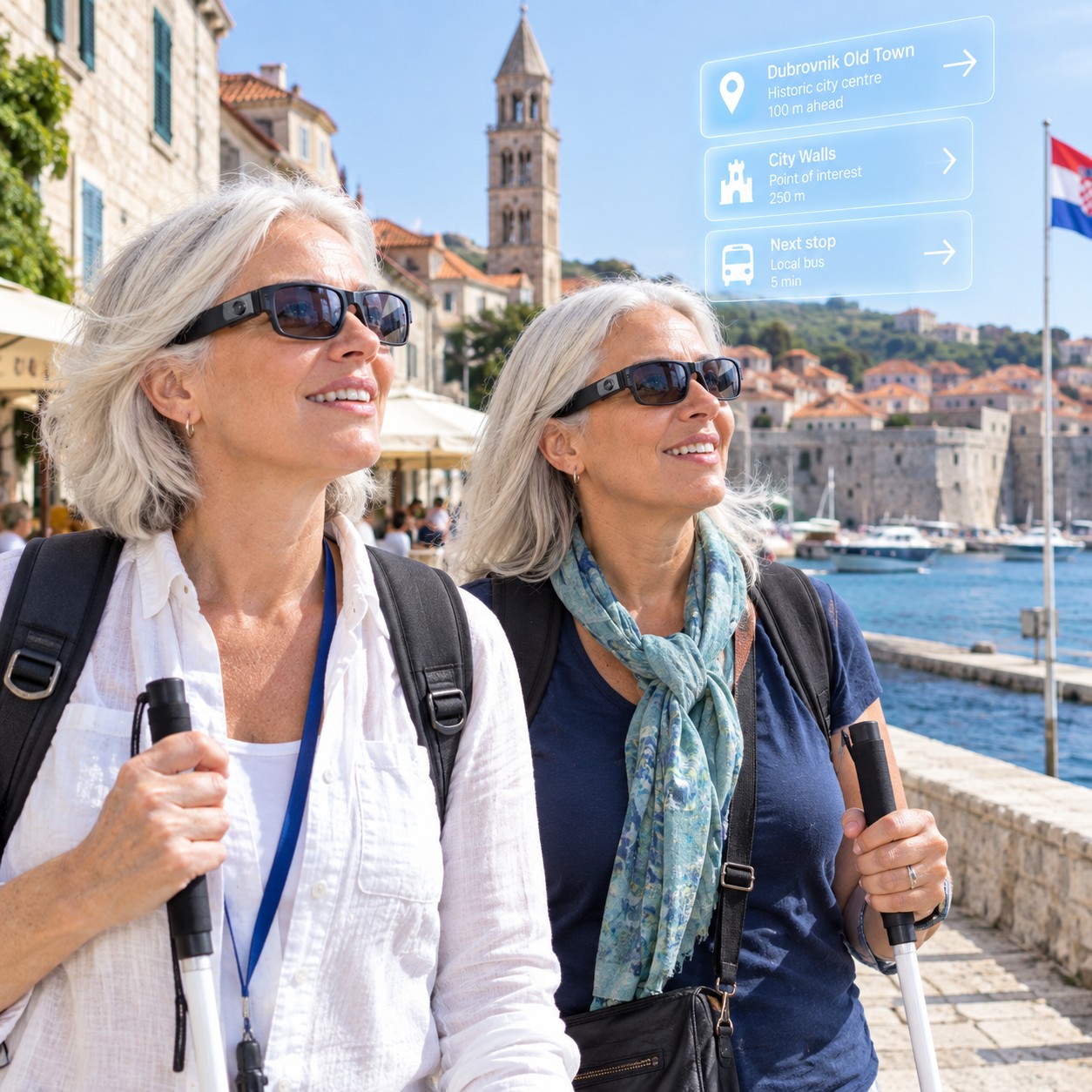
2 vision impaired Women are travelling and using Meta Ray-Ban GlassesTravel is another area where I see enormous potential.

Whether I am delivering training, attending conferences or visiting somewhere new, information shapes how independently I can explore.

When someone describes an environment, they naturally describe what they think is important. That is not a criticism. We simply notice different things.

Someone might notice a landmark building. I might want to know about a café, an accessible entrance, a local business or public art.

The glasses could provide information that lets me decide what matters, rather than relying entirely on someone else’s interpretation.

That is not just about travel. It is about choice.

For another perspective, listen to Ann Hyslop and Sarah Evans talking about travelling with Meta Ray-Ban glasses.

Looking to the Future

As I get older, maintaining my independence and contributing meaningfully matter to me. I want to keep working in digital accessibility, advocating for people with disability, delivering training and helping organisations become more accessible.

The glasses will not remove every barrier. No technology can do that.

They may reduce the effort of accessing information, leaving more time for what matters most.

For many people, they are an interesting piece of technology. For me, they represent easier access to information, greater independence and fuller participation in everyday life.

That is why I will be getting them. Not because they are the latest technology.

Because access to information creates independence, and independence creates the opportunity to participate fully in the world around us.